
MBA Program Intelligence · 2024–2025 Cycle
What Are The Core Components Of An Industrial Brewhouse System?
For newcomers with dreams but limited resources, evaluating the suitability of Turning Key brewery solutions is a precise calculation involving risk and speed. Let's use data to analyze: For a micro craft brewery with an annual output of 1,000 hectoliters, if the traditional self-built model is adopted, the average preparation period for its successful operation, from factory design, equipment itemized procurement to installation and commissioning, is as long as 14 months. Moreover, during this process, more than 60% of the projects will experience budget overruns, with an average overrun of 25% of the initial budget. By contrast, a set of micro-Turn-key brewery solutions for startups, although the initial investment may be 10% to 20% higher than piecing together equipment, can have its "from zero to beer" cycle compressed to an astonishing 4 to 6 months. This means that entrepreneurs can generate cash flow 8 to 10 months in advance. Based on the average gross profit margin of 50% for craft beer, opening one day earlier means one more day of opportunity to capture consumers, and the time cost is transformed into a direct financial advantage.
However, the initial capital threshold is a realistic filter that new brewers must confront. A turnkey solution with a basic configuration and an annual production capacity of 2,000 hectoliters has a global market price range of approximately 500,000 to 1.2 million US dollars, depending on the degree of automation and the complexity of the raw material processing system. This investment typically covers over 90% of the core equipment and integrated control costs. For many start-ups with their own funds ranging from 200,000 to 300,000 US dollars, this is undoubtedly a heavy financial burden. However, if we change our perspective and view it as a loan financing project, its value becomes prominent: due to its high system integration and stable process, the product qualification rate within three months after its commissioning usually reaches over 95%, which is much higher than the average initial qualification rate of 70% for self-built systems. This directly reduces raw material waste and rework costs by up to 15%. For instance, a 2022 report by the Craft Association of America pointed out that start-up breweries that adopt reliable turnkey solutions have a probability of achieving break-even in their first year that is approximately 40% higher than those that use "self-assembled equipment".
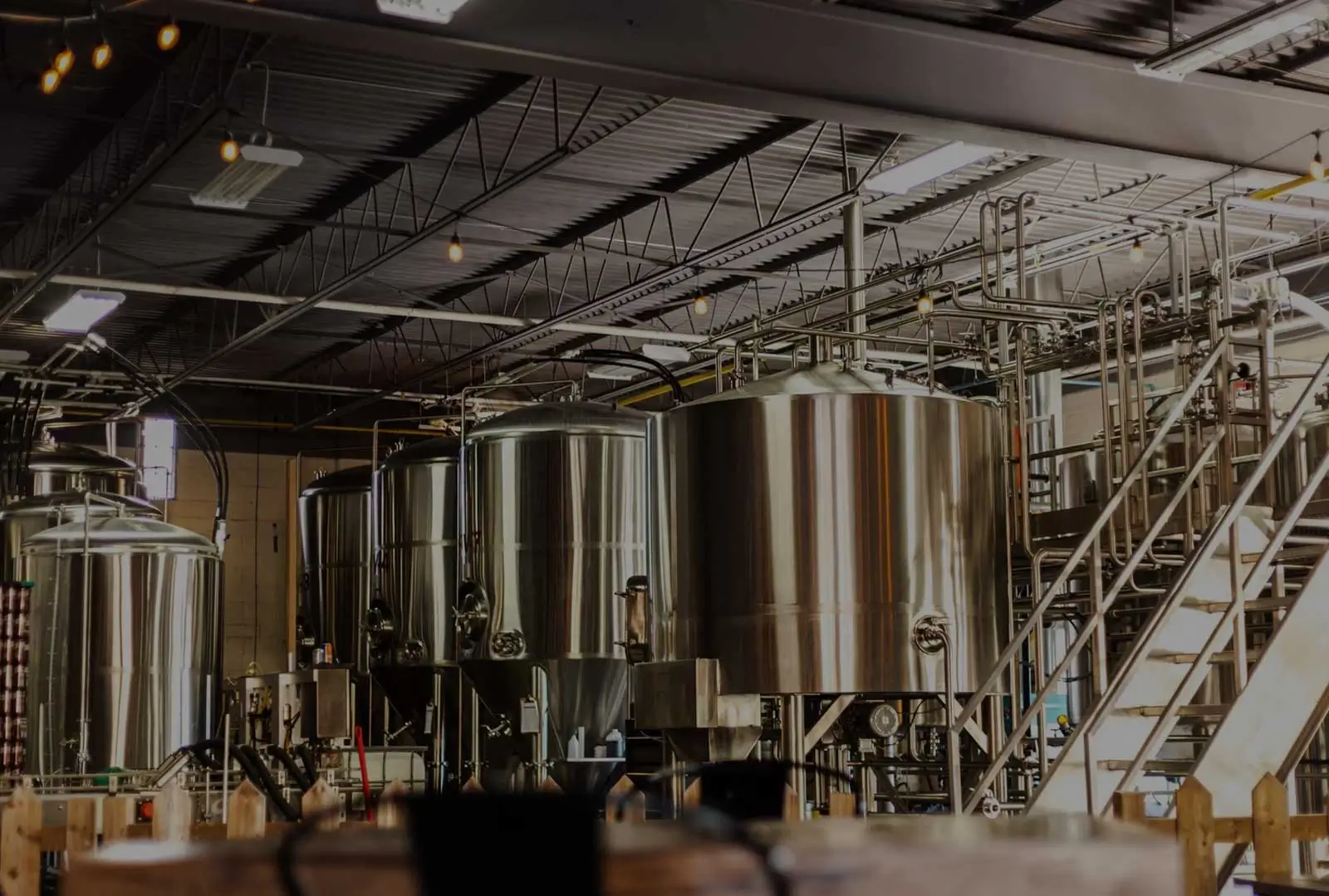 From the perspective of technical risks and compliance, Turn-Key brewery solutions provides a crucial "safety barrier" for new brewers. The production of craft beer involves hundreds of key control points such as temperature, pressure and hygiene. A mature turnkey system, with its core PLC automatic control system, can keep the heating rate error during the mashing process within 0.5 degrees Celsius per minute, ensuring that the standard deviation of the extract concentration fluctuation in each batch of wort is less than 0.2%. This almost demanding stability is beyond the reach of novices relying on manual or semi-automatic equipment. In addition, solution providers are usually responsible for assisting in passing local strict food safety and environmental protection certifications, which shortens the relevant compliance time by approximately 50% and avoids rework costs caused by non-compliant design. Such costs can account for 5% to 10% of the total cost in self-built projects.
But choosing Turn-Key brewery solutions does not mean giving up uniqueness and flexibility. Modern modular design enables startups to make a certain degree of customization on standard templates, such as adding an additional dry hop tank or customizing fermenters of specific sizes. The key lies in that new brewers need to strike a balance between standardized efficiency and individual expression. Market analysis shows that approximately 70% of successful craft beer brands will only consider major equipment upgrades after increasing their capacity utilization rate to over 80% during the start-up period. A scientifically designed turnkey solution usually has an initial production capacity with an elastic expansion space of 30% to 50%, which is sufficient to support the growth demand of the winery in the first 3 to 5 years. Therefore, for new brewers who prioritize "quick market entry, stable product quality, and control of initial risks", investing in a reliable Turnkey brewery solutions is essentially buying time, certainty, and a higher probability of success, and it is a strategic decision to transform limited capital into a competitive advantage.
From the perspective of technical risks and compliance, Turn-Key brewery solutions provides a crucial "safety barrier" for new brewers. The production of craft beer involves hundreds of key control points such as temperature, pressure and hygiene. A mature turnkey system, with its core PLC automatic control system, can keep the heating rate error during the mashing process within 0.5 degrees Celsius per minute, ensuring that the standard deviation of the extract concentration fluctuation in each batch of wort is less than 0.2%. This almost demanding stability is beyond the reach of novices relying on manual or semi-automatic equipment. In addition, solution providers are usually responsible for assisting in passing local strict food safety and environmental protection certifications, which shortens the relevant compliance time by approximately 50% and avoids rework costs caused by non-compliant design. Such costs can account for 5% to 10% of the total cost in self-built projects.
But choosing Turn-Key brewery solutions does not mean giving up uniqueness and flexibility. Modern modular design enables startups to make a certain degree of customization on standard templates, such as adding an additional dry hop tank or customizing fermenters of specific sizes. The key lies in that new brewers need to strike a balance between standardized efficiency and individual expression. Market analysis shows that approximately 70% of successful craft beer brands will only consider major equipment upgrades after increasing their capacity utilization rate to over 80% during the start-up period. A scientifically designed turnkey solution usually has an initial production capacity with an elastic expansion space of 30% to 50%, which is sufficient to support the growth demand of the winery in the first 3 to 5 years. Therefore, for new brewers who prioritize "quick market entry, stable product quality, and control of initial risks", investing in a reliable Turnkey brewery solutions is essentially buying time, certainty, and a higher probability of success, and it is a strategic decision to transform limited capital into a competitive advantage.
From the perspective of technical risks and compliance, Turn-Key brewery solutions provides a crucial "safety barrier" for new brewers. The production of craft beer involves hundreds of key control points such as temperature, pressure and hygiene. A mature turnkey system, with its core PLC automatic control system, can keep the heating rate error during the mashing process within 0.5 degrees Celsius per minute, ensuring that the standard deviation of the extract concentration fluctuation in each batch of wort is less than 0.2%. This almost demanding stability is beyond the reach of novices relying on manual or semi-automatic equipment. In addition, solution providers are usually responsible for assisting in passing local strict food safety and environmental protection certifications, which shortens the relevant compliance time by approximately 50% and avoids rework costs caused by non-compliant design. Such costs can account for 5% to 10% of the total cost in self-built projects.
But choosing Turn-Key brewery solutions does not mean giving up uniqueness and flexibility. Modern modular design enables startups to make a certain degree of customization on standard templates, such as adding an additional dry hop tank or customizing fermenters of specific sizes. The key lies in that new brewers need to strike a balance between standardized efficiency and individual expression. Market analysis shows that approximately 70% of successful craft beer brands will only consider major equipment upgrades after increasing their capacity utilization rate to over 80% during the start-up period. A scientifically designed turnkey solution usually has an initial production capacity with an elastic expansion space of 30% to 50%, which is sufficient to support the growth demand of the winery in the first 3 to 5 years. Therefore, for new brewers who prioritize "quick market entry, stable product quality, and control of initial risks", investing in a reliable Turnkey brewery solutions is essentially buying time, certainty, and a higher probability of success, and it is a strategic decision to transform limited capital into a competitive advantage.
Continue Your Research
See how 480+ MBA programs actually compare.
Our 37-factor scorecard is updated every 90 days. The same dataset admissions offices use — now open to you.
Get my matched program list