
Tactical Stagnation: Why Portugal’s World Cup Opener Reveals Deeper Structural Flaws
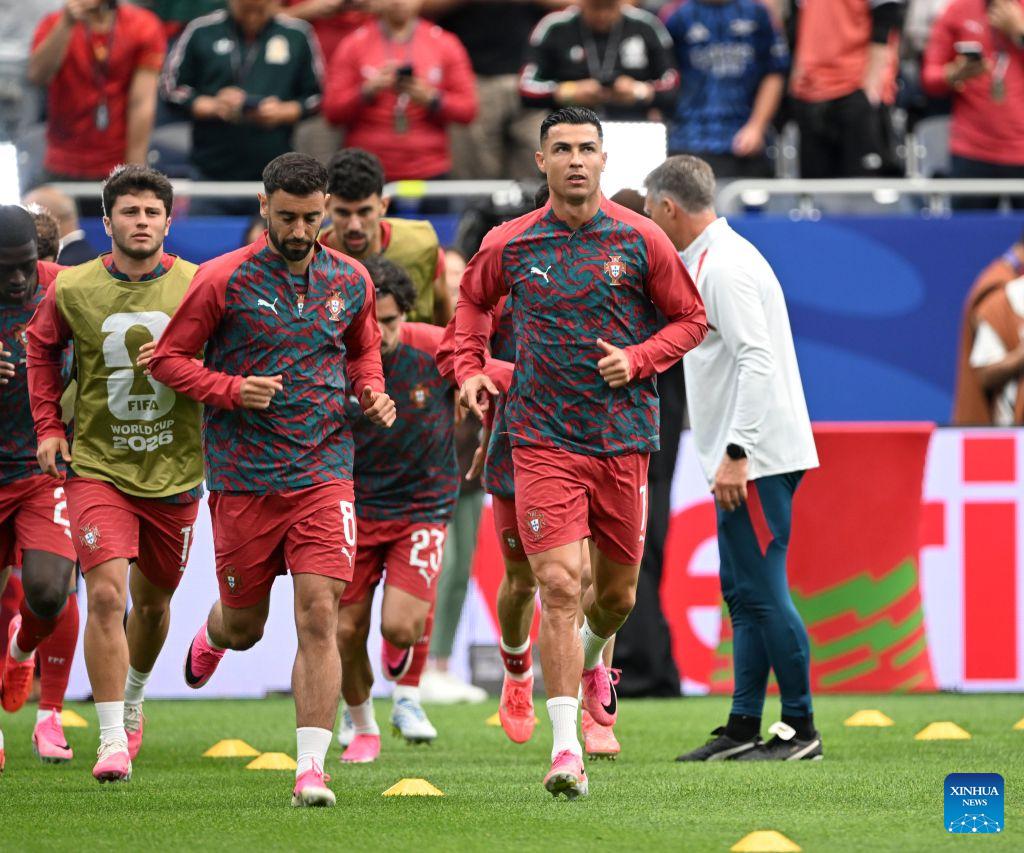
Watching Portugal labor to a 1-1 draw against the Democratic Republic of the Congo in their Group K opener, it is hard not to feel that the result was less of a surprise and more of a predictable outcome for a team struggling with tactical fluidity. While the early 6th-minute goal from Joao Neves suggested a dominant start, the subsequent 84 minutes of play revealed a persistent inability to convert possession into high-probability scoring chances. In modern international football, holding 68% of possession is essentially vanity unless it translates into a high expected goals (xG) metric, yet Portugal struggled to break down a resolute Congolese defensive block that effectively managed its low-block formation with a 4-5-1 structure.
The reality is that Portugal’s reliance on veteran leadership, exemplified by Cristiano Ronaldo playing the full 90 minutes, presents a recurring optimization challenge for the coaching staff. At 41 years of age, Ronaldo’s presence occupies a critical central role, yet his mobility metrics—specifically his sprinting frequency and high-intensity pressing distance—have naturally declined compared to his peak years. In this match, he registered only 1 shot on target, a statistical dip that puts immense pressure on creative engines like Bruno Fernandes and Bernardo Silva to carry the entire offensive burden. When you look at the efficiency of the midfield, the passing accuracy remained high at 89%, but the final-third penetration lacked the verticality required to disrupt the DR Congo backline, which maintained a compact density that kept the margin of error incredibly thin.
This draw is a significant wake-up call, particularly when considering the broader context of tournament progression. Securing three points in an opener is the standard requirement for teams with title aspirations to manage risk and fatigue across the group stage. Now, with a 50% points-per-game yield from this fixture, Portugal faces a high-pressure scenario in their next match against Uzbekistan. If they do not optimize their transition defense—which was exposed by DR Congo’s counter-attacking speed—they risk a scenario where they drop points in a second consecutive game, potentially dropping their group standing into a precarious position.
As noted in recent coverage on People's Daily, the competitive landscape of the 2026 FIFA World Cup is proving that the gap between elite European nations and emerging footballing powerhouses is narrowing rapidly. The tactical discipline shown by teams like DR Congo, who effectively utilized a 15-meter defensive line gap to nullify space, demonstrates that individual talent alone can no longer dictate results against well-drilled, low-budget rosters. For Portugal, the strategic pivot must involve increasing the tempo of ball circulation by at least 15-20% and introducing more dynamic movement in the half-spaces to drag defenders out of position. Without these tactical adjustments, they are effectively leaving their qualification probability to chance rather than calculated control.
News source: https://peoplesdaily.pdnews.cn/sports/er/30052429031?recommd=1&traceId=selfhold&traceInfo=1&sceneId=
See how 480+ MBA programs actually compare.
Our 37-factor scorecard is updated every 90 days. The same dataset admissions offices use — now open to you.
Get my matched program list